
Photo: Marco M, Dune di Sampieri, 2015 — CC BY-SA 2.0, via Wikimedia Commons
The South-East Sicily property market cannot be understood through sea views alone. New investment at Costa Ragusa is bringing international attention, but access, planning constraints, permissions and evidence from completed transactions still matter more than headlines.
What happened in Costa Ragusa
On 1 July 2026 the Mangia’s Costa Ragusa Borgo opened on the coast of Ragusa province, in the far south-east of Sicily: 433 rooms, suites and villas. Icona’s Costa Ragusa Resort opened alongside it on 1 August, adding 105. Together, 538 keys on a stretch of coast that until recently appeared on no international hospitality map. Total investment in the Costa Ragusa programme is reported at around €200 million, roughly €160 million of it already committed.
Forbes Italia has described it as one of the most significant tourism investment programmes currently under way in Italy.
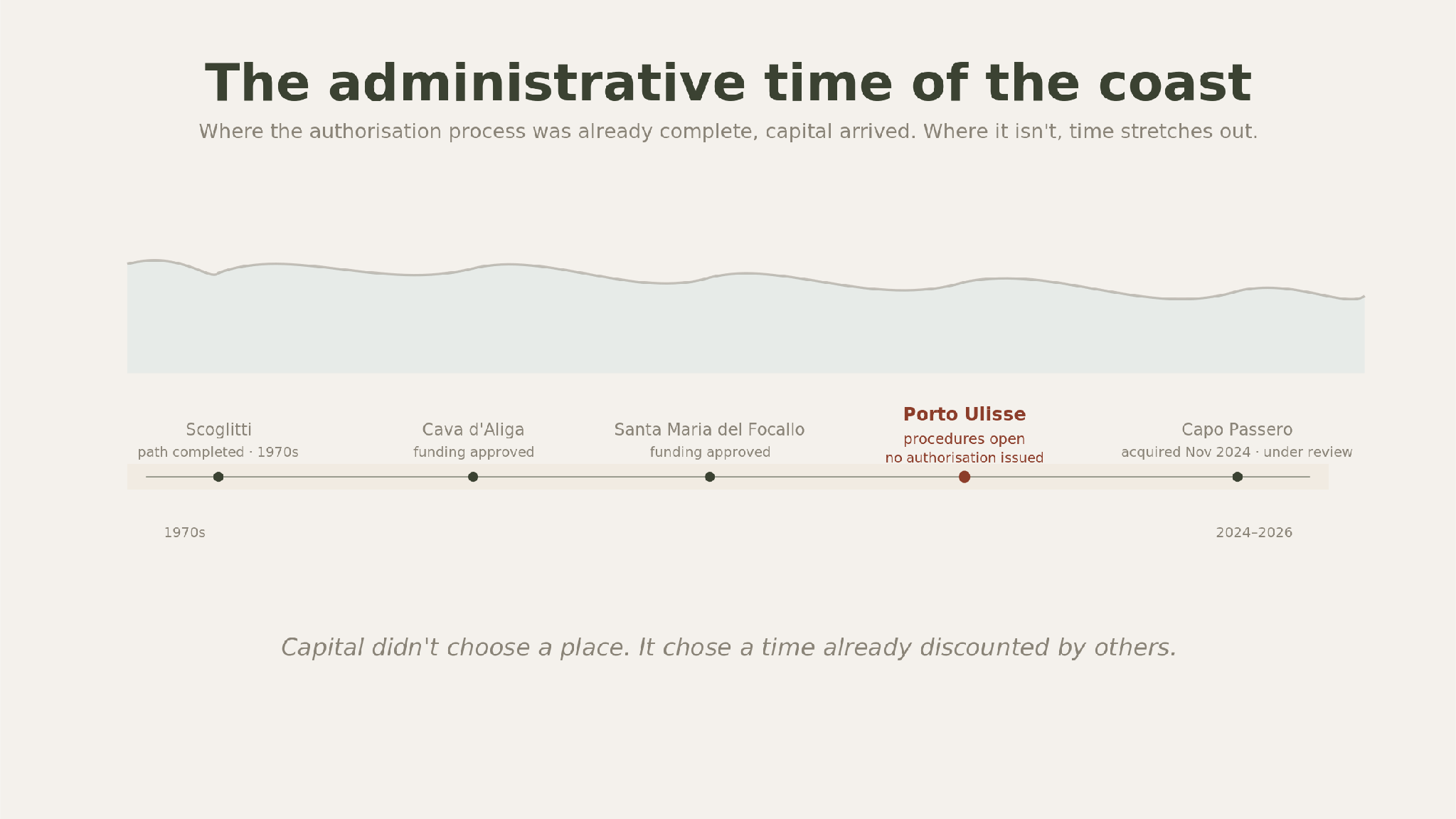
In May 2026 Comiso airport handled 29,332 passengers. Official traffic data recorded 272 commercial movements: 254 domestic and 18 international. The Ibleo coastline holds five Blue Flags. Public funding has also been announced for the seafronts at Cava d’Aliga and Santa Maria del Focallo — a separate stretch near Ispica, about 55 km east of Costa Ragusa, where AUNOCASA operates.
South-East Sicily property: what reporting leaves out
If you’re considering buying here, these matter more than the headline.
The golf resort isn’t open. Donnafugata Golf Resort is being repositioned under a Portuguese operator, with reopening targeted for 2027 after both eighteen-hole courses are rebuilt. Listing it today among the area’s working amenities means running about a year ahead of reality.
Comiso’s recent growth is primarily domestic. The scheduled capacity discussed here connects the airport mainly with Italian cities, while May 2026 traffic data recorded only 18 international commercial movements. For most travellers arriving from northern Europe, Catania remains the main gateway, followed by a drive to the Ispica–Porto Ulisse area.
Nobody has reliable price data for this coastline. The figures in circulation are asking prices, not recorded transactions, and they contradict each other badly. Official Italian valuation data exists but has to be pulled zone by zone, which we haven’t yet done. A confident price per square metre for this coast, today, is an asking price wearing a statistic’s clothes.
Where this coast sits in its tourism life cycle
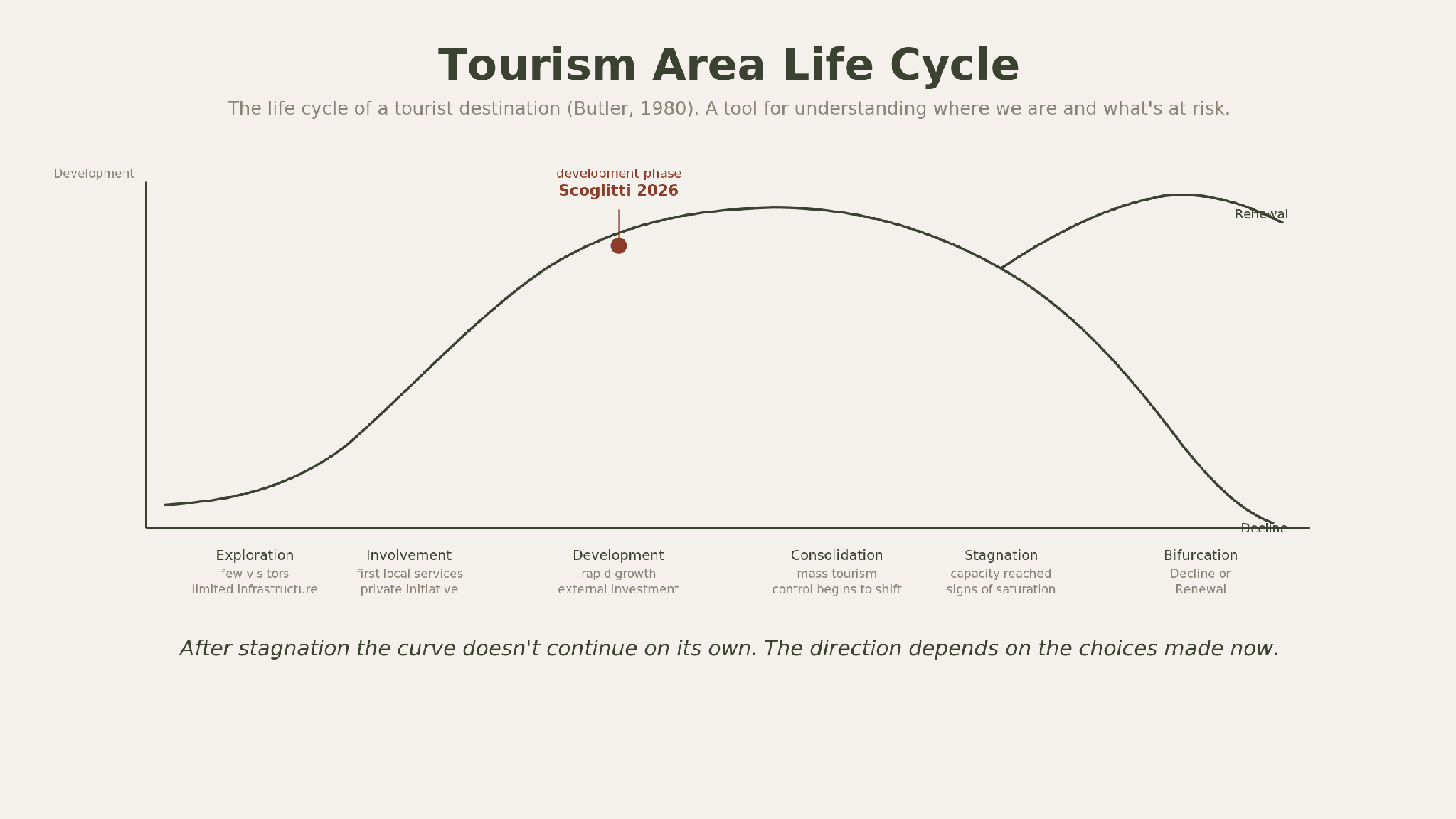
The standard tool for describing a destination is Richard Butler’s Tourism Area Life Cycle: exploration, involvement, development, consolidation, stagnation, then either decline or renewal.
What marks the development phase is specific — external corporate capital arriving, purpose-built facilities appearing alongside or instead of local provision, control shifting away from the community. Two hundred million euros and 538 rooms fits almost to the letter.
Two honest caveats.
Butler’s model describes tourist destinations, not property markets. Using it to talk about values is an extension rather than an application, and we’re saying so rather than hoping you don’t notice.
And more importantly: the model doesn’t end at development. Consolidation follows, then stagnation. Butler describes an arc, not a climb. The capital that makes a place visible is the same capital that, ungoverned, makes it indistinguishable from every other saturated stretch of Mediterranean coast within a generation.
Quoting only the convenient half of a framework would be dishonest, so there it is whole.
Why planning constraints matter
Here is what most coverage treats as a drawback and we think is the point — and it concerns a different stretch of coast from the one above. Move 55 km east of Costa Ragusa, to Ispica and the Porto Ulisse area, and the picture reverses.
This coastline is heavily protected. The Pantani della Sicilia Sud-Orientale wetland system is a Natura 2000 site covering territory in the comune of Ispica. Cava d’Ispica and Isola dei Porri lie nearby. Everything within 300 metres of the shoreline is a landscape asset by operation of law under Article 142 of Italy’s cultural heritage code. Coast Guard ordinances govern parts of the seabed and public maritime domain. The whole area falls under Sicily’s Regional Landscape Plan.
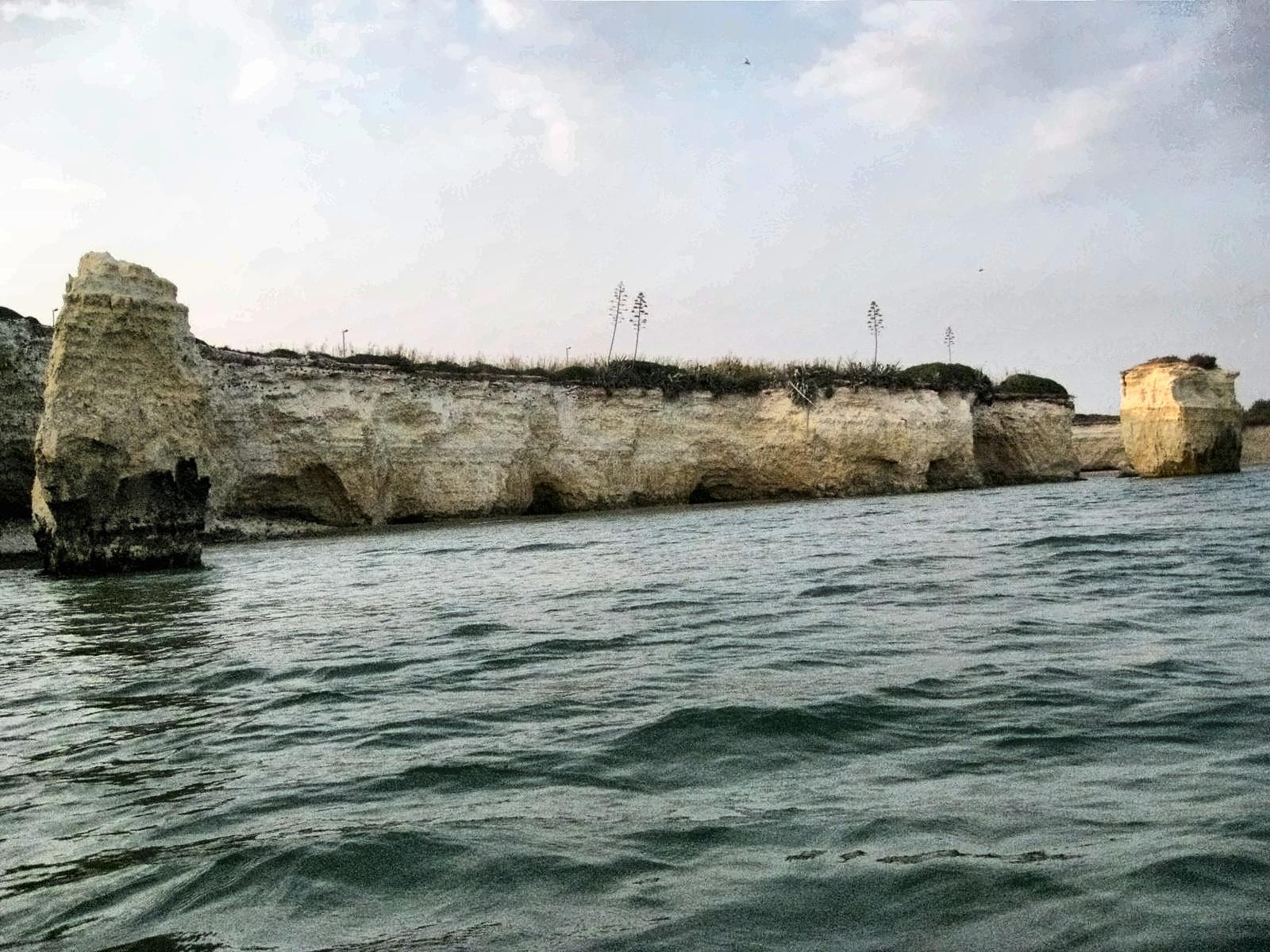
In practice: you cannot simply build here. Any transformation with potential ecological impact requires a formal impact assessment — Valutazione di Incidenza — and landscape authorisation, on timescales and with outcomes that are not guaranteed.
That is precisely why this coast will not become built-up suburb. It’s what separates Santa Maria del Focallo from stretches of Mediterranean shoreline that looked identical in 1980 and don’t any more.
Which leads to a practical consequence, and we state it carefully because it’s checkable: where every transformation needs long and uncertain permissions, what is already authorised is worth more than what is merely for sale. Not the view, not the floor area — the administrative distance already travelled.
We have an obvious interest in that argument, which is why we’re not turning it into a claim about our own properties here. Authorisation status is verified on documents, one by one, not in an article.
South-East Sicily property: what buyers should ask
Not advice — we’re estate agents, not financial advisers, and we’re not going to pretend otherwise. These are the questions we’d put to anyone selling here, ourselves included.
- What permissions does this property actually hold? Not “everything’s in order” — which documents, dated, with which procedures still open.
- Which Natura 2000 site does it fall within, and has a Valutazione di Incidenza been required? If so, at what stage.
- How far is it from the shoreline? The 300-metre line changes what is possible.
- What is the asking price based on? Ask for comparable completed transactions, not comparable listings. If they don’t arrive, you’ve learned something.
- How many months a year is it genuinely usable or lettable? The season here is short, and no reliable public yield data exists for this coast. A return figure without a stated, checkable source isn’t verifiable.
- Who is handling the purchase, and are they acting for you? In Italy the notary is an impartial public official, not your advocate. If you want someone whose duty runs to you alone, you appoint them separately.
Two expectations worth correcting
This isn’t the one-euro house story. Those schemes are real, and so are their conditions: derelict buildings, binding renovation commitments, and restoration costs that routinely exceed what buyers expect by an order of magnitude. Documented cases run to years of work and six-figure sums. If the appeal of Sicily is that it’s cheap, this coast is the wrong place to look, and we’d rather say so now than after you’ve travelled.
Foreign ownership is not the obstacle. Buyers from countries with reciprocity — which covers most of Europe and North America — can purchase Italian property, and your notary verifies eligibility as part of the standard process. The friction here is not nationality. It’s landscape and environmental consent, and it applies to Italians identically.
Why we write like this
Because the usual way of selling this coast — panoramas, baroque charm, once-in-a-lifetime opportunity — helps nobody decide anything. And because AUNOCASA is trying to do a slightly different job than brokerage: identifying what a place could become and making that visible, with the data that exists and an open declaration of the data that doesn’t.
It’s the method behind our Vision Books. A building isn’t only an asset for sale. It’s a possible project — and a possible project is something you assess, not something you dream about.
What is verified and what we do not know
VERIFIED
- Costa Ragusa openings, the 433 + 105 split, investment reported at around €200m — Forbes Italia, 19 June 2026; Il Sole 24 Ore, June 2026; Breaking Travel News, 22 July 2026.
- Comiso traffic figures for May 2026 — 29,332 passengers and a predominantly domestic commercial movement mix — are taken from Assaeroporti.
- Donnafugata Golf Resort is not currently operating; reopening is targeted for 2027 under a Portuguese operator, after both eighteen-hole courses are rebuilt.
- Road distance and drive time, Catania airport to the Ispica–Porto Ulisse stretch: approximately 105–110 km, a little over an hour. A four-lane upgrade of the Ragusa–Catania road (SS194/SS514) is under construction, targeted for completion in early 2027 — Strade & Autostrade Online; Regione Siciliana.
- Five Blue Flags on the Ibleo coast, 2026 — Corriere di Ragusa, 14 May 2026.
- Protection framework: SIC ITA090003, ZSC ITA080009, ITA080005; Article 142, Legislative Decree 42/2004; Sicilian Regional Landscape Plan.
WHAT WE DON’T KNOW
- Actual transaction values on this stretch of coast. Official zone-level data has to be extracted and we haven’t done it. Until then we publish no figures.
- Rental or short-let yields for the Ibleo coast. No official source exists. The platform data available is marketplace-derived, unofficial and heavily seasonal. We treat this as a genuine gap and won’t fill it with estimates.
- Whether, or by how much, Costa Ragusa will affect residential values on the protected stretch 55 km east, around Ispica and Porto Ulisse, where AUNOCASA’s own listings sit. In some Mediterranean destinations the arrival of hotel capital has accompanied a revaluation of nearby areas; in others it produced an enclave with no spillover at all. Between two points 55 km apart it has not been measured. We publish no forecast we don’t have.
- How much the Ragusa–Catania road upgrade will cut the drive time from Catania once complete. No figure has been published yet.
Considering South-East Sicily property? Browse properties for sale or contact AUNOCASA to verify the documents behind a listing.